1–5
Reported sensitivity
Limit of detection of 1–5 fg DNA per reaction.
LUPRIMATM · CELL CULTURE QUALITY CONTROL
PCR-based screening for Mycoplasma, Acholeplasma and Ureaplasma contamination in cell cultures and laboratory samples.
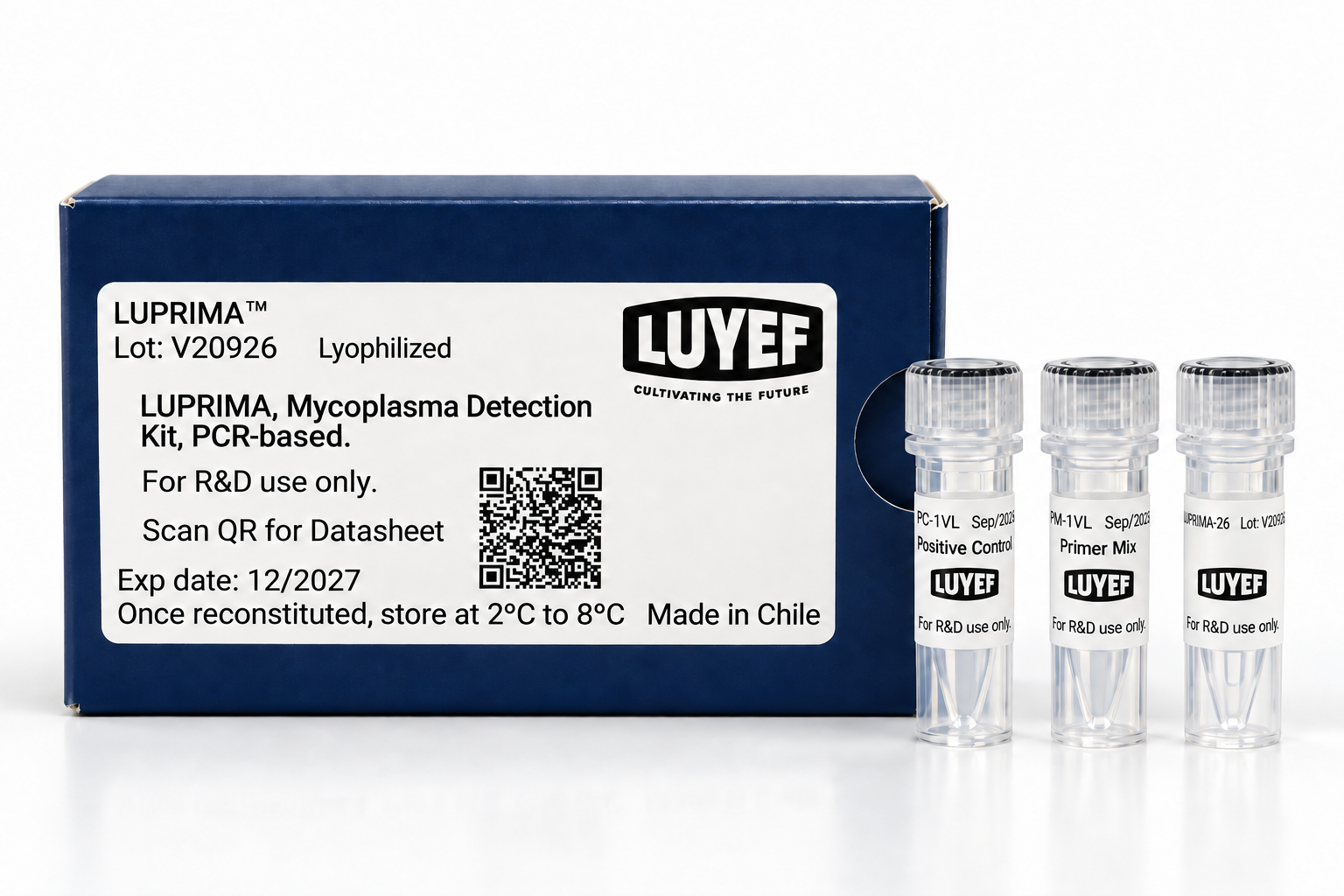
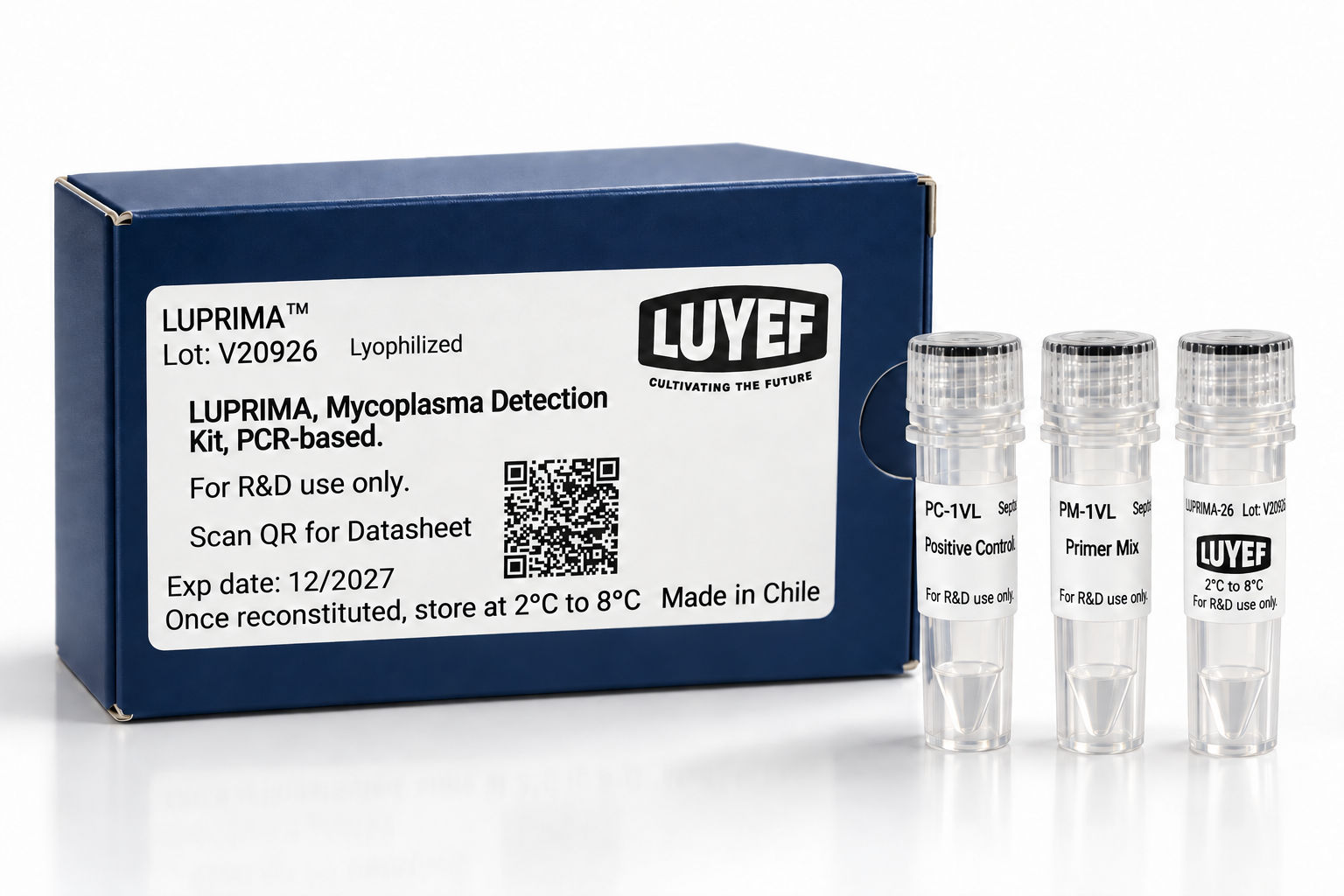
LUPRIMATM · 25 reactions · Lyophilized · Made in Chile
For research use only (RUO).
Protect your cultures. Advance your research.
A conserved region of the 16S rRNA gene is the target of LUPRIMA’s primer set. An endpoint PCR workflow connects your culture supernatant to a gel-based readout, with internal and positive controls included.
Limit of detection of 1–5 fg DNA per reaction.
Coverage of 24 species based on in silico analysis.
Internal control for PCR inhibition monitoring and a non-infectious positive DNA control.
Heat-treated supernatant can be used directly, without a separate DNA extraction step.
Assay performance depends on sample preparation and reaction conditions.
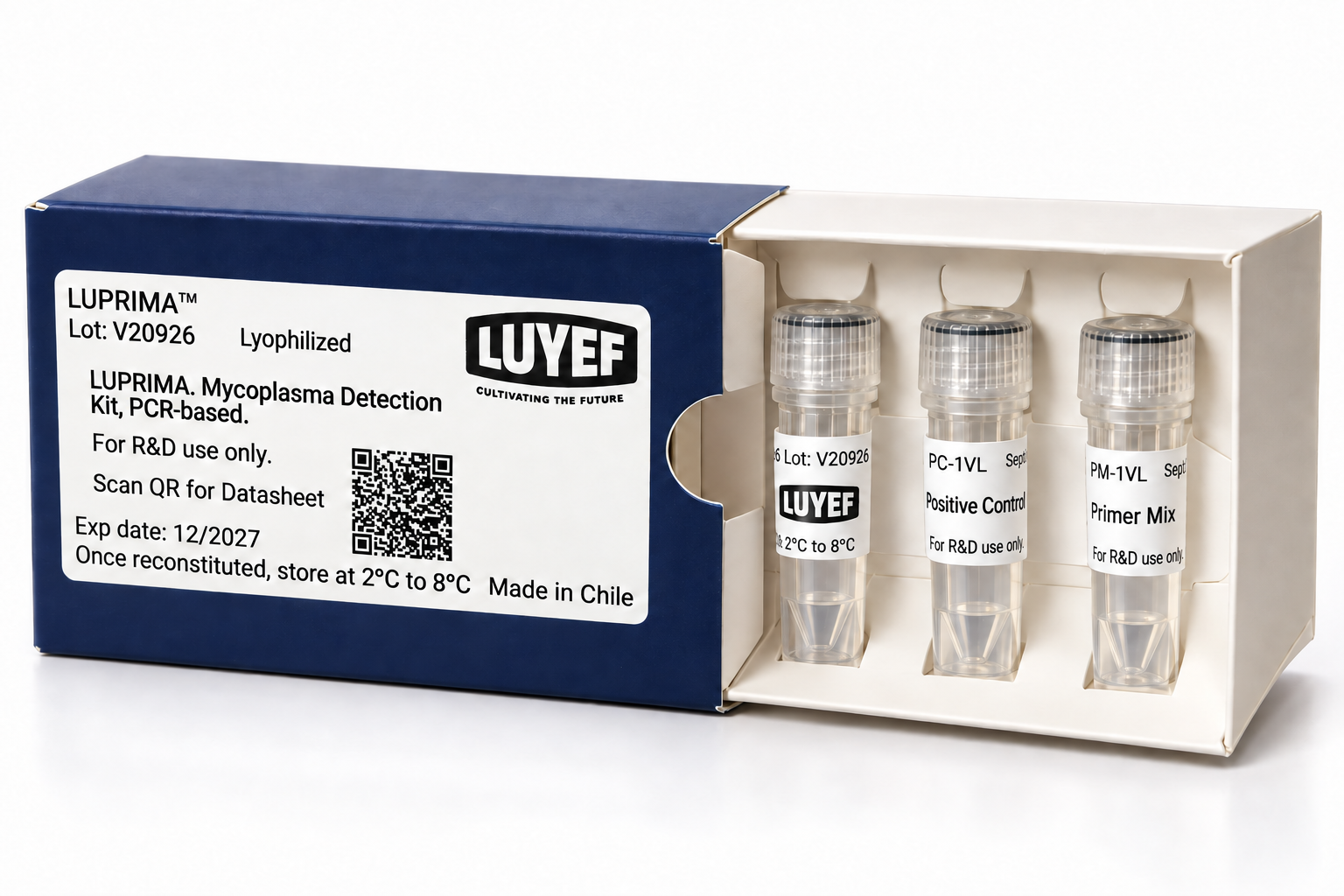
LUPRIMATM · 25 reactions
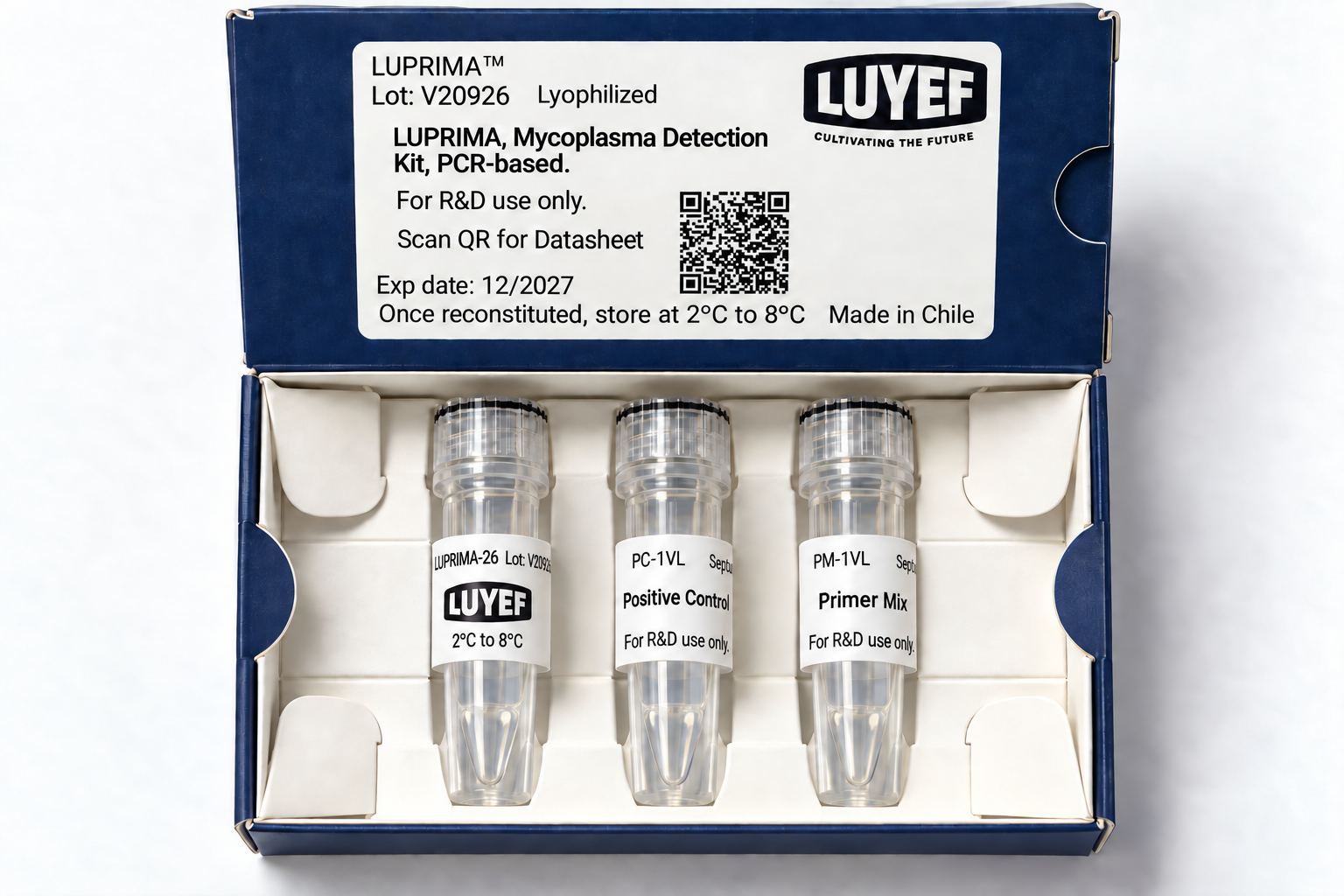
Supplied lyophilized. Reconstitute the Primers Mix and controls with nuclease-free water before use, following the volumes specified in the protocol. After reconstitution, keep the reagents refrigerated at 2–8 °C.
From culture to readout
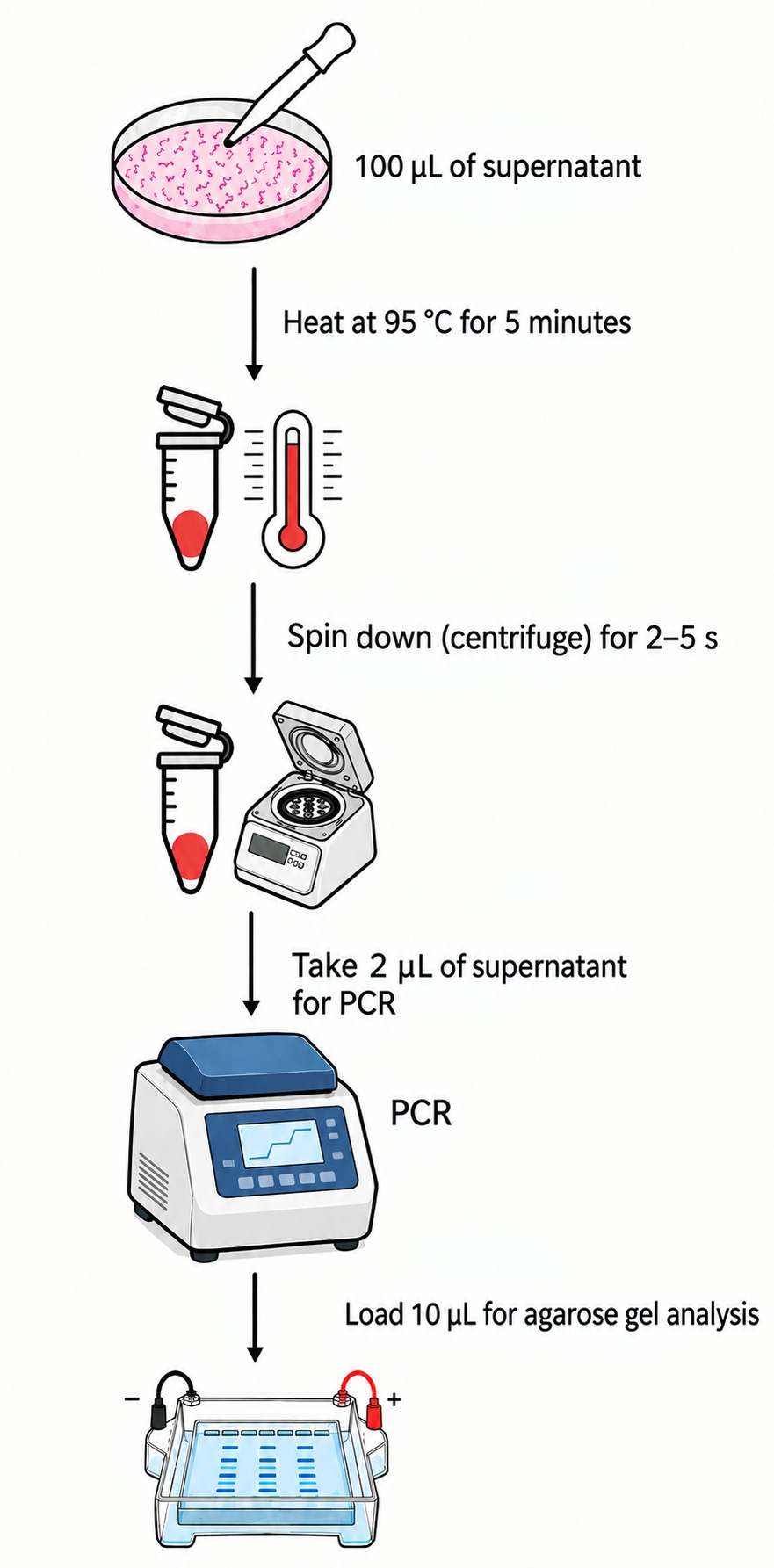
Prepare the supernatant, amplify the target and read the bands together with valid run controls.
100–200 µL of supernatant from a culture at 90–100% confluence.
Heat at 95 °C for 5 minutes. Briefly centrifuge to pellet debris.
Use 2 µL of prepared sample in a 25 µL PCR reaction. Run 40 cycles.
Load 10 µL onto a 1.5% agarose gel. Run at 100 V for about 45 minutes.
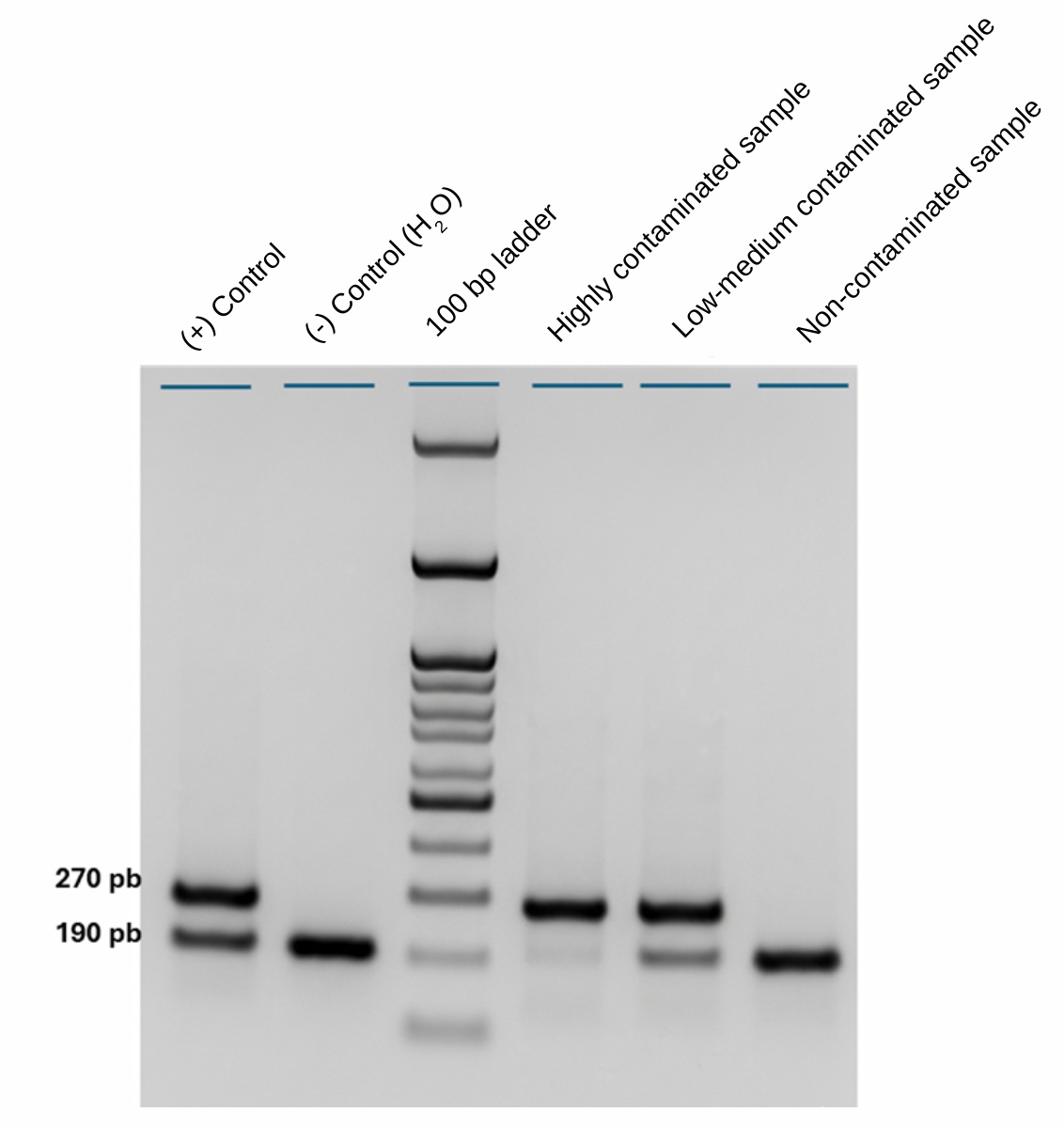
Evaluate the ~270 bp target and ~190 bp internal control bands.
| Stage | Temperature | Time |
|---|---|---|
| Initial denaturation | 95 °C | 2 min |
| Denaturation · 40 cycles | 95 °C | 30 s |
| Annealing · 40 cycles | 55 °C | 1 min |
| Extension · 40 cycles | 72 °C | 30 s |
| Final extension | 72 °C | 5 min |
Follow the complete product information for reaction composition, reagent volumes, controls and troubleshooting.
Gel-based interpretation
The protocol describes a target band at approximately 270 bp and an internal control band at approximately 190 bp.
| Band pattern | Interpretation |
|---|---|
| ~190 bp only | No Mycoplasma target detected; internal control amplified. |
| ~270 + ~190 bp | Target detected, with internal control amplification. |
| Strong ~270 bp only | Positive pattern described for highly contaminated samples. |
Use valid positive and negative run controls. Refer to the full protocol for troubleshooting and interpretation.
Meet LUPRIMA
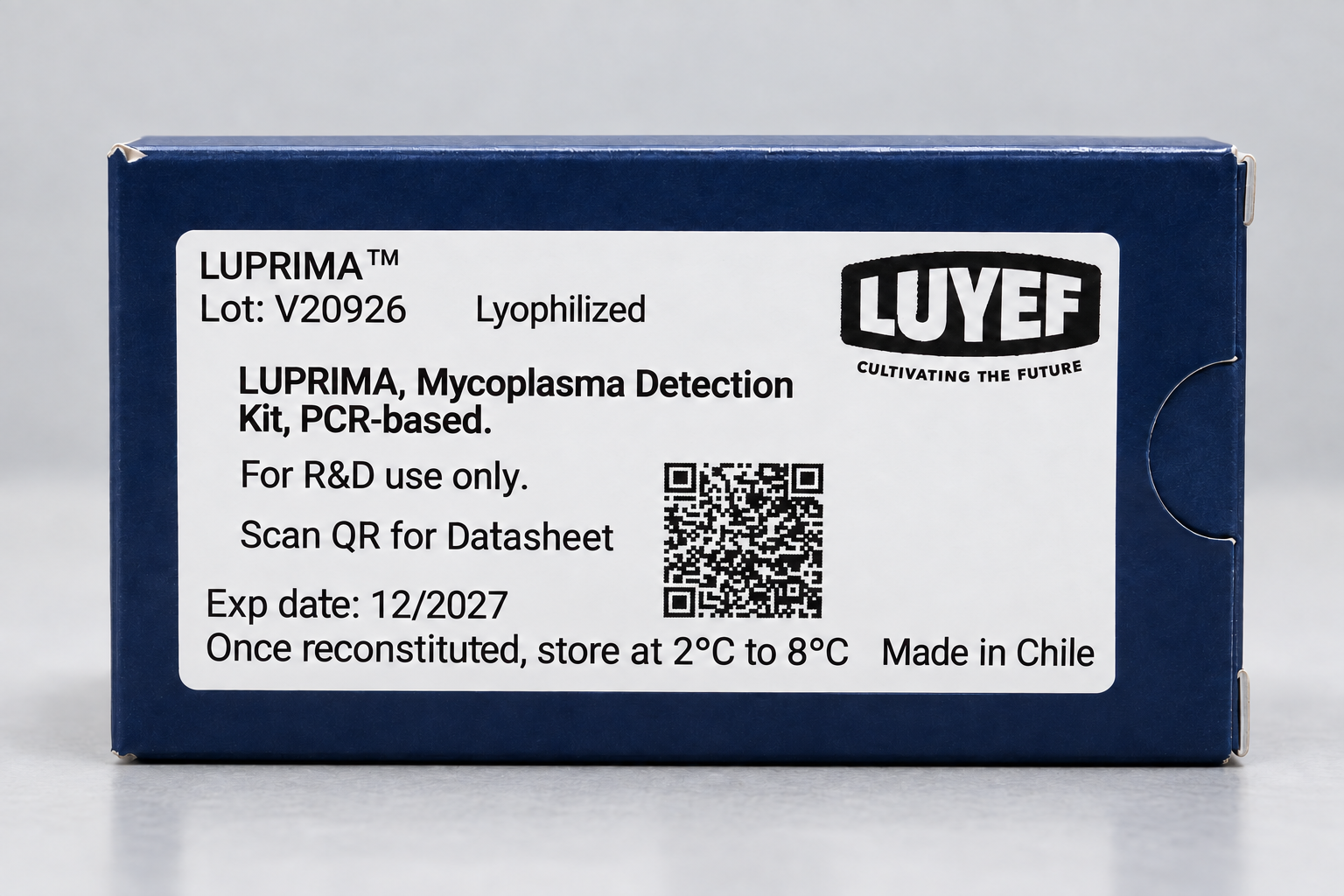
Explore the packaging, reagent format and kit presentation.
Technical information
An endpoint PCR assay for research laboratories working with cell cultures and biological samples.
Coverage of the following 24 species is based on in silico analysis. See Table 2 in the product information for amplicon sizes and detailed analysis.
Mycoplasma faucium, M. hyorhinis, M. orale, M. arginini, M. fermentans, M. salivarium, M. pulmonis, M. bovis, M. falconis, M. arthritidi, M. spermatophilum, M. opalescens, M. primatum, M. maculosa, M. cloacale, M. hyosynoviae, M. synoviae, M. penetrans, M. hominis, M. pirum, M. genitalium, M. pneumoniae, Acholeplasma laidlawii and Ureaplasma urealyticum.
| Product | LUPRIMATM |
|---|---|
| Format | 25 reactions · lyophilized components · reconstitution required |
| Method | Endpoint PCR · 16S rRNA gene |
| Reported LoD | 1–5 fg DNA/reaction |
| Readout | 1.5% agarose gel electrophoresis |
| Intended use | Research use only (RUO) |
The kit may be received at room temperature. Refrigerated storage at 2–8 °C is recommended upon receipt.
Keep reconstituted primers and controls refrigerated at 2–8 °C.
Aliquot and freeze for long-term storage. Avoid repeated freeze–thaw cycles.
Storage information on this page reflects the updated handling guidance provided by Luyef. The downloadable protocol contains an earlier post-rehydration storage instruction.
Luyef Biotechnologies
Contact our team for availability, quotations and technical support.
For research use only. Not intended for diagnostic procedures. Designed for detection of Mycoplasma contamination in cell cultures and laboratory samples. This assay has not been validated for clinical or diagnostic use in humans or animals.
